Island Returns
Doorstep pickup for online returns, aimed at a small local market. Primarily a learn-by-building project and a potential side hustle I'm considering doing for real: a full web app with customer and driver views and a database behind it, built with Claude Code and hosted on Cloudflare.
Overview
Customers on Daniel Island, SC, a master-planned, affluent community full of busy families and professionals, leave online returns on their porch. We pick them up and drop them at the local shipping stores.
About 19% of online sales were returned in 2025. In a LendingTree survey, 58% of shoppers kept an unwanted item because returning it was too inconvenient. Doorstep pickup removes the hardest part of returning online orders.
Picture a busy parent juggling kids, work and a steady stream of online orders. Returns pile up by the front door because the trip means loading everyone into the car, unbuckling the kids and hauling it all inside, or squeezing it in after a long workday when the lines are long. It's never urgent, so it gets put off another day or avoided altogether.
Higher-income households, like many on Daniel Island, return more: about 40% more of what they buy than lower-income households do. Luxury and convenience services, like at-home car fueling and mobile dog grooming, are a normal part of everyday life for many here.
On-island only. Online returns only, dropped at the UPS Store or Postal Haus. One or two pickup days a week so it stays a manageable side hustle for now.
A web app with a customer view and a driver view: scheduling, return intake, route and drop-off tools, QR labels and receipts. Designed by me, built with Claude Code.
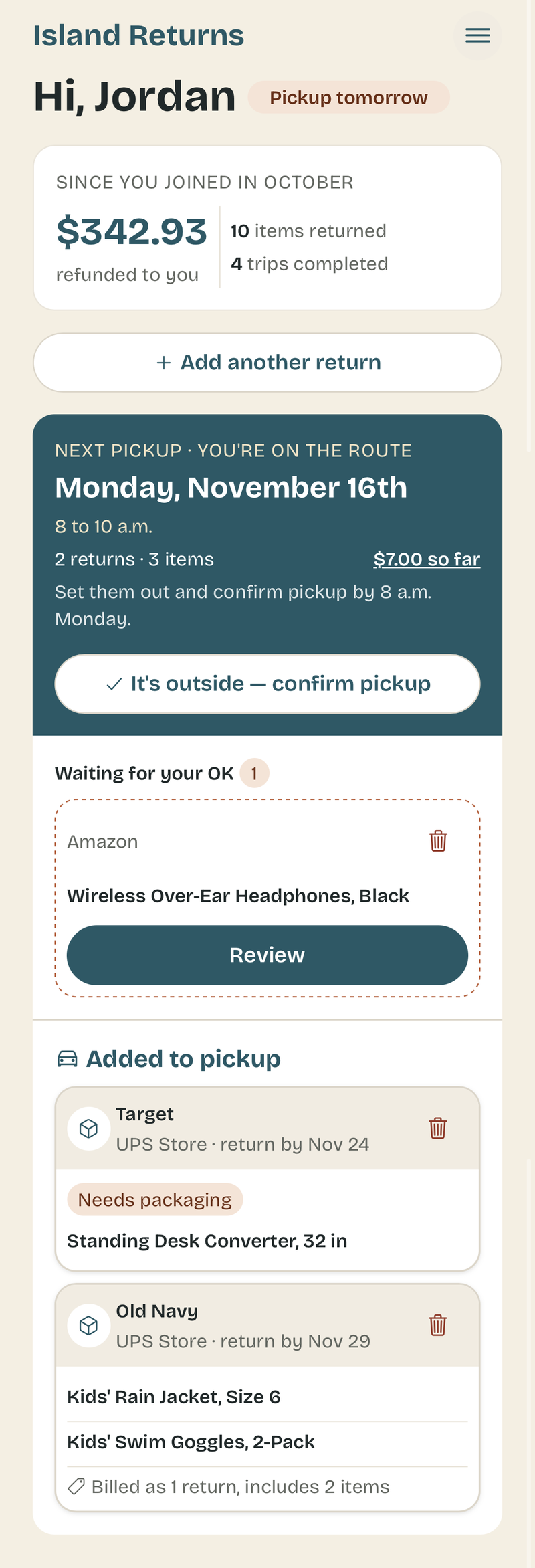
The customer home screen
Tap a number on the screen, or pick one from the list, to see what each part does and why I designed it that way. Sample data throughout.
How a return moves through the app
Customers sign up in the app and save our contact once. After that, most returns should start with a text or a forwarded email. Returns get added throughout the week, and on pickup day the customer confirms everything is outside.
Customer workflow
The happy path is for customers to text a QR code directly to us or forward the return email from their inbox. We want adding a return and scheduling a pickup to be as easy and uncluttered as possible, while staying clear about the terms.
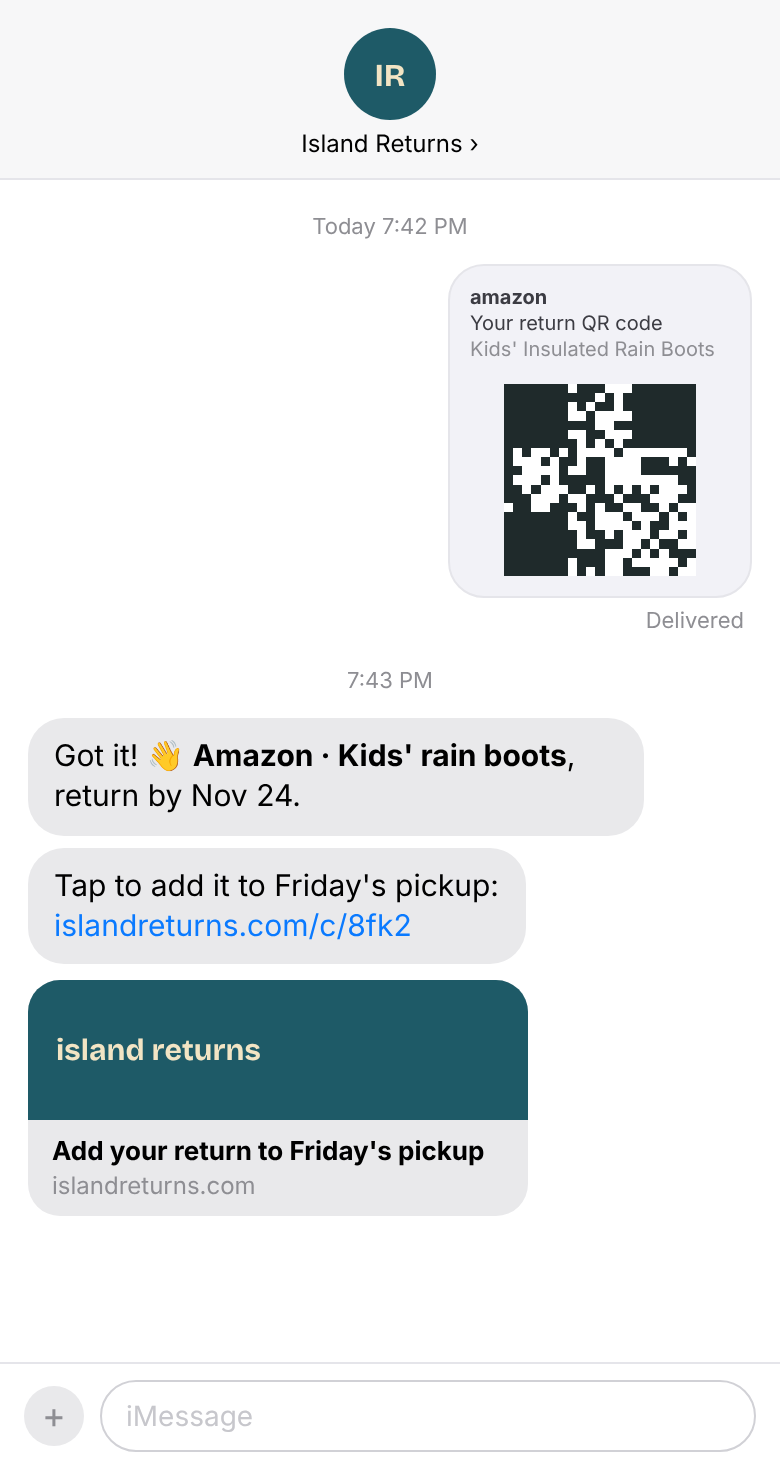
The customer texts us the return QR code, or forwards the return email. The AI reads it and replies with a link, and the return waits as a draft under "Waiting for your OK."
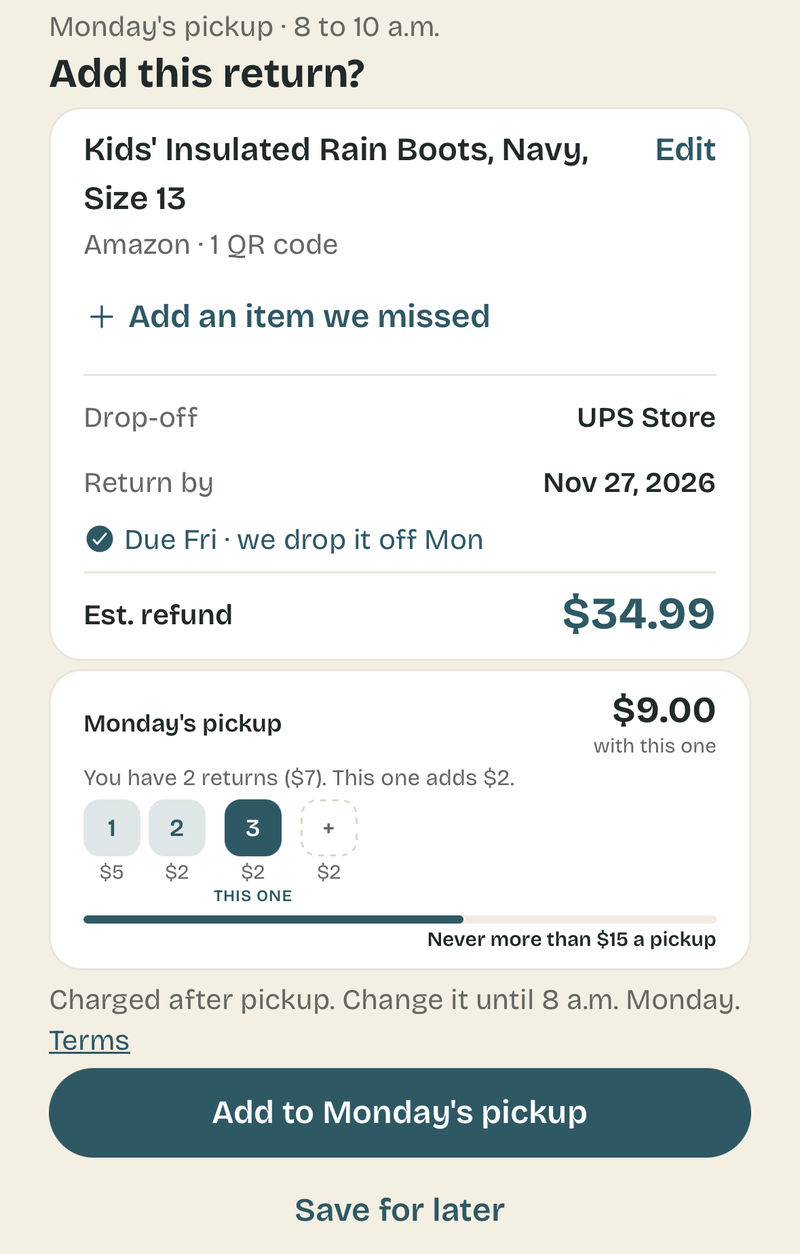
Tapping the link opens the draft in the app. Nothing joins a pickup until the customer taps Review and confirms it. Customers can add returns any time during the week.
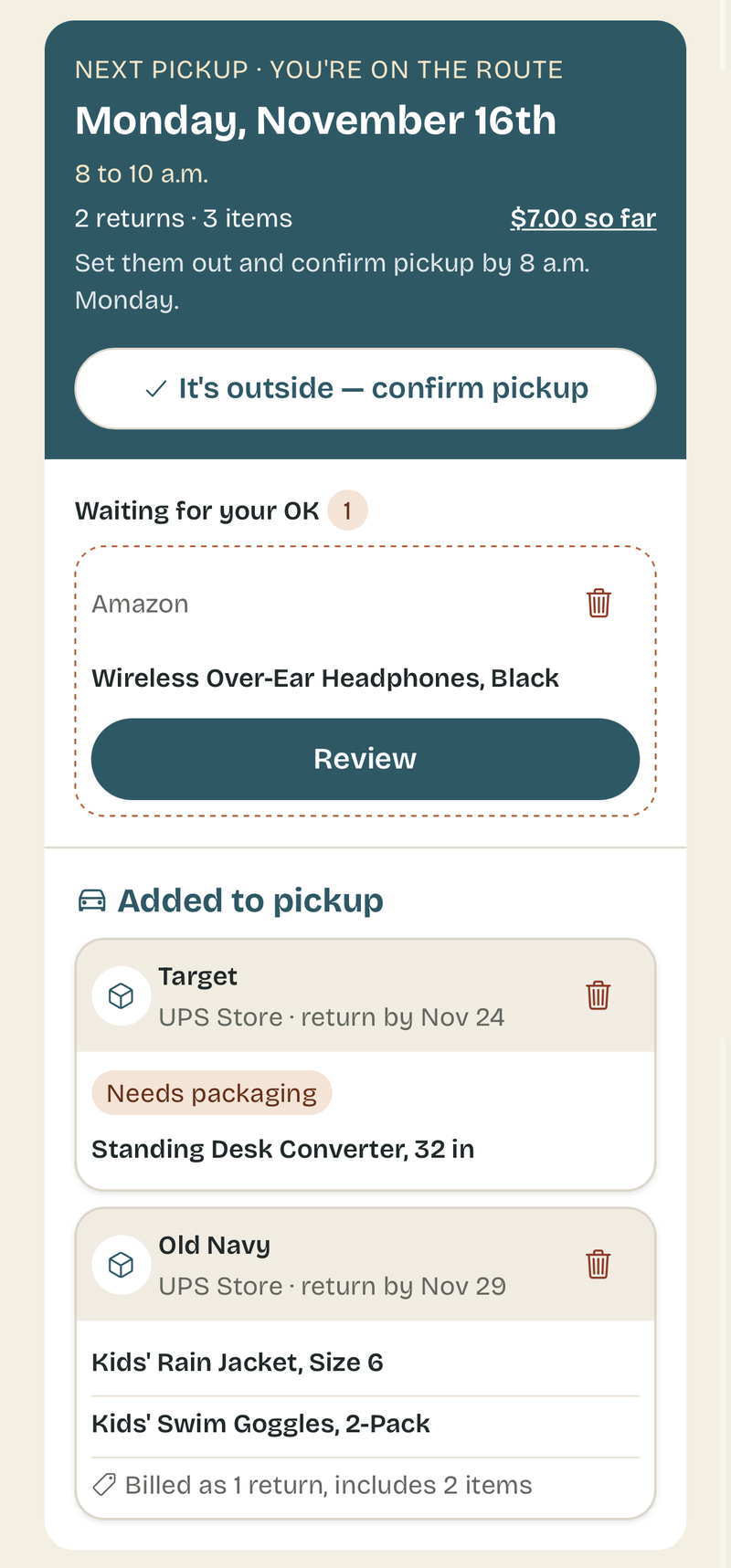
On pickup day, once the returns are out on the porch, the customer taps to confirm the pickup. Confirmed returns show under Added to pickup.
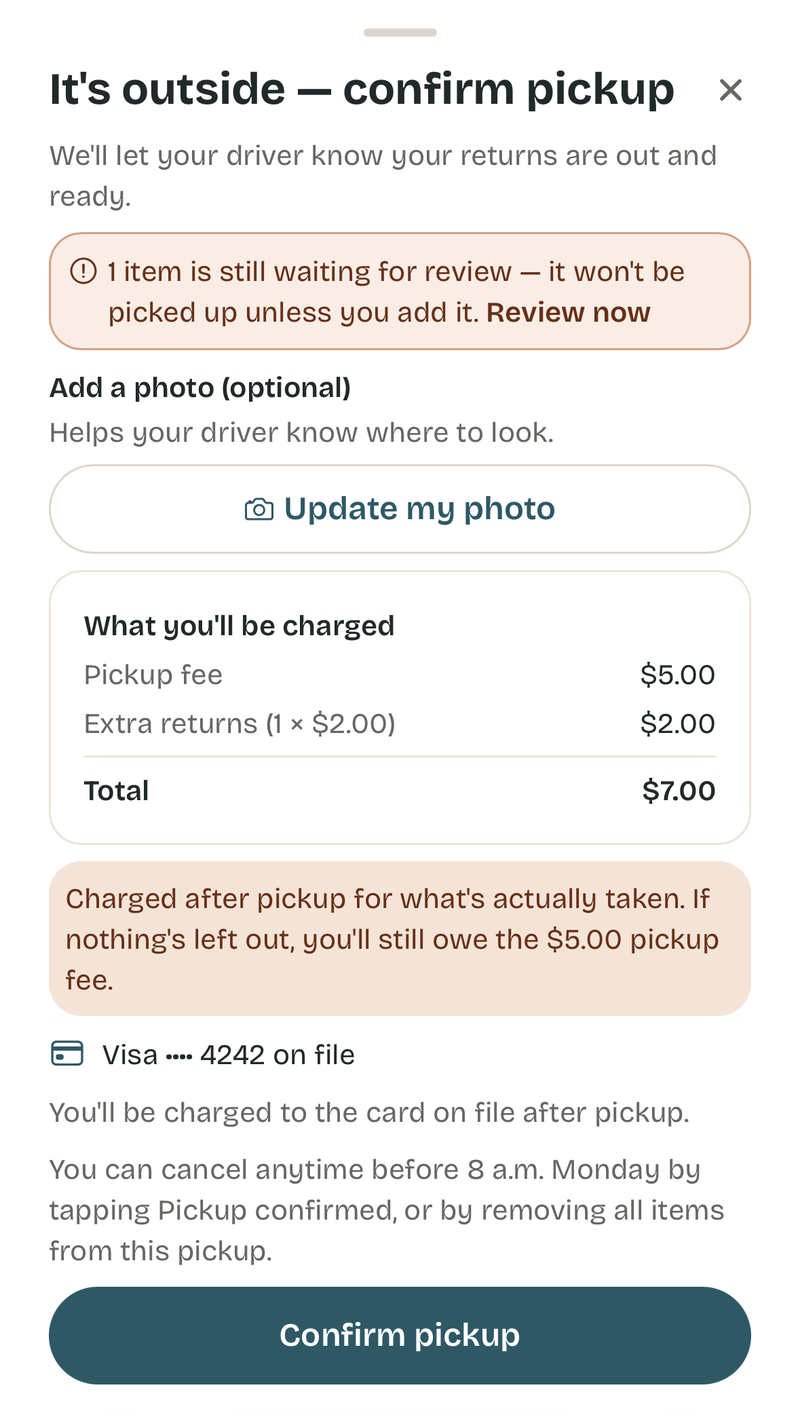
The final check, once the returns are actually outside: any returns still waiting for review, the charges, and the terms. Nothing is charged until after the pickup.
Driver workflow
I built the driver tools for two reasons. They were a chance to learn by building something real, and they cut the time my husband (the driver) would spend working on pickup days. Everything he needs is in one place, in the order he needs it.
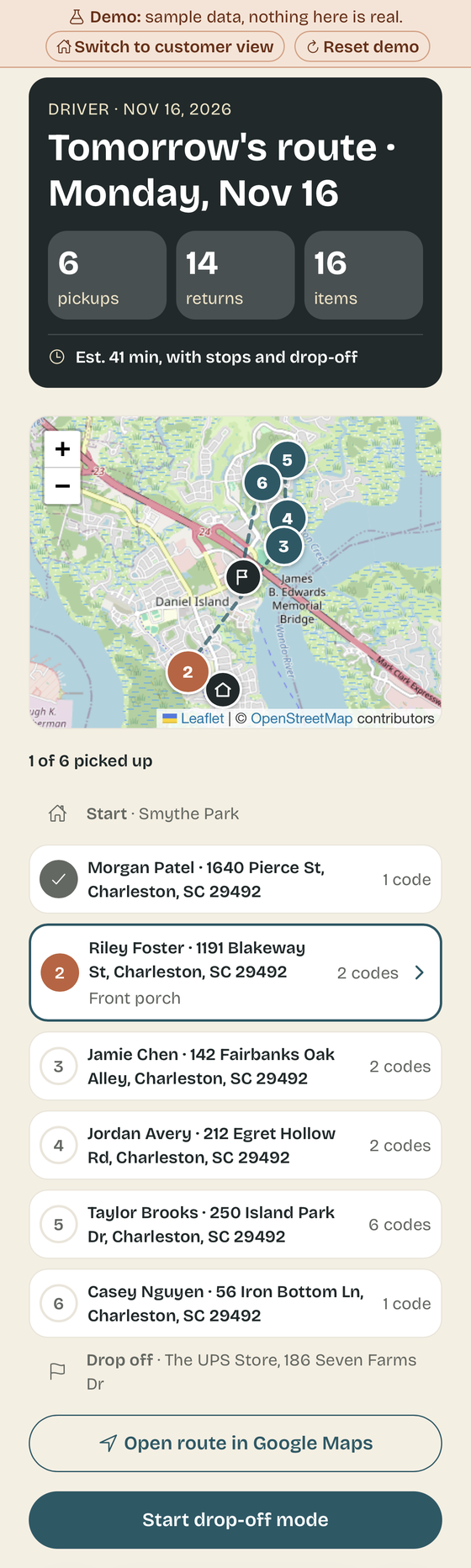
Everything for the day's route in one view: an estimated route time, stops in order, and a map that removes stops as you go.
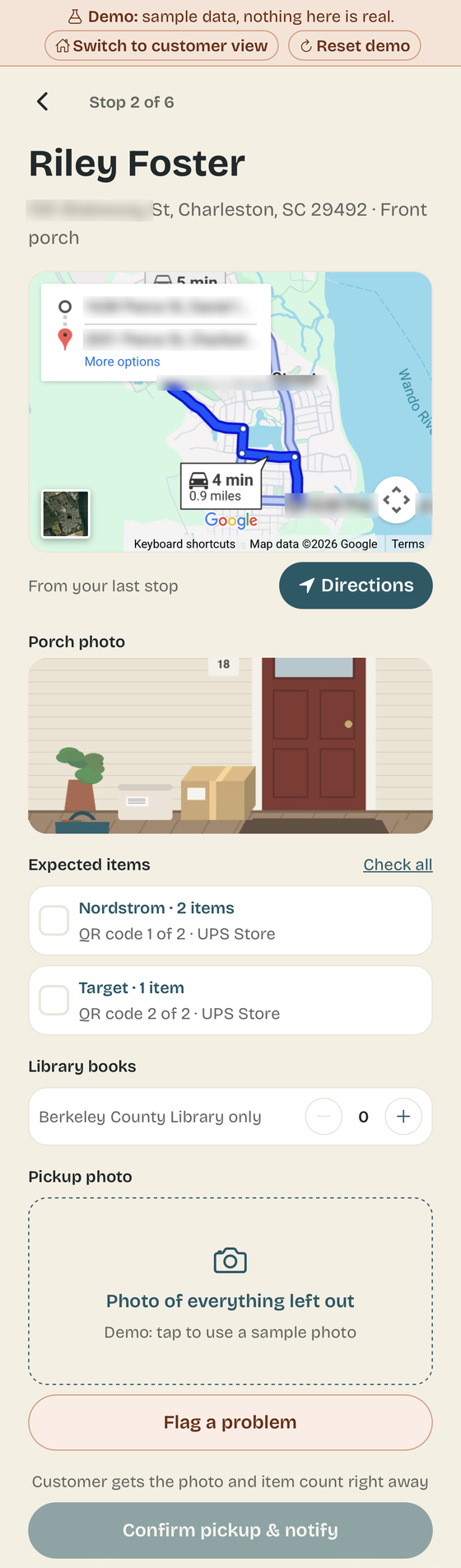
Everything for the stop in one place, so there’s no hunting for the address, the pickup spot or what to take.
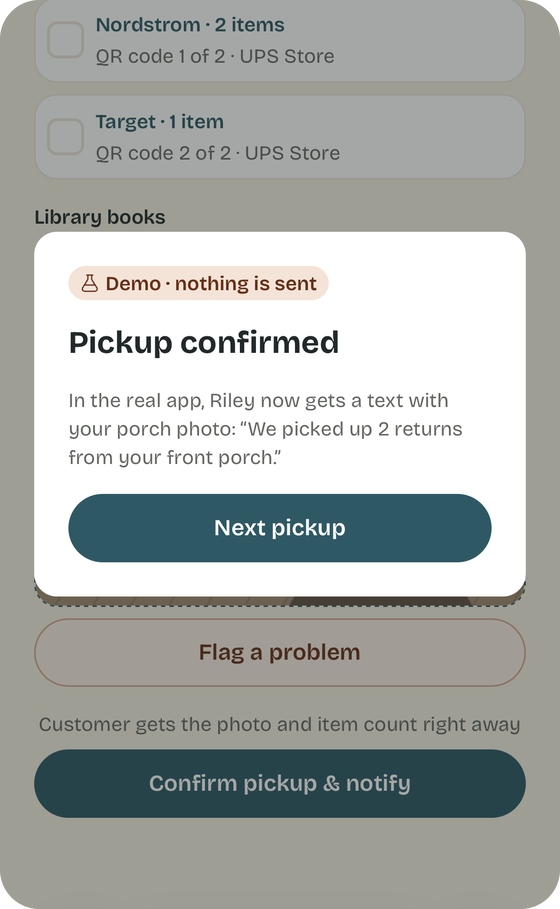
Confirming sends the customer the photo and item count right away.
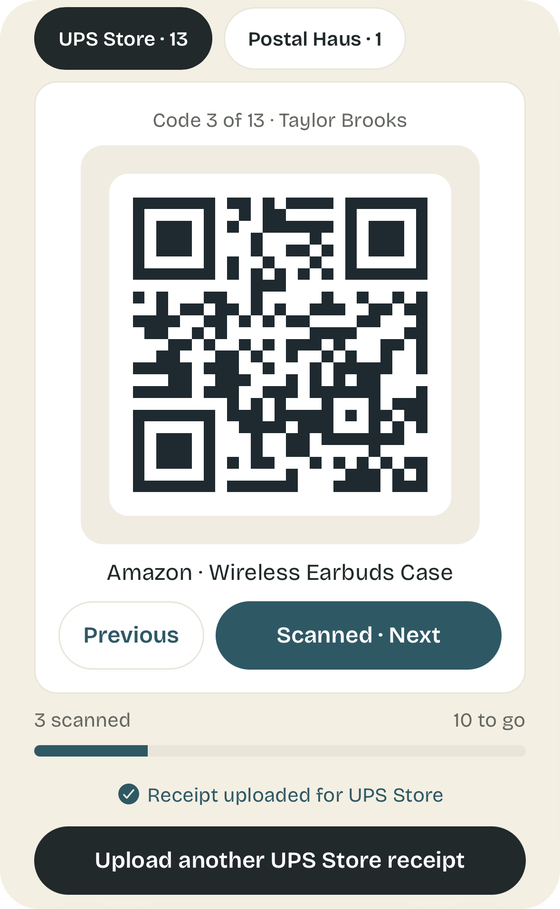
At the counter, the driver steps through each return with the customer and item shown and taps to mark it scanned. Once a return is scanned, the customer’s refund shows on their home screen. Any packaging charges are uploaded too.
You're the PM
When someone files an online return, they're usually in the retailer's app with the QR code on screen. Texting us a screenshot right then is the fastest path: no saving the code, no digging through screenshots or emails at the UPS counter later. The catch is habit. Most people save the screenshot and plan to upload it later.
How would you get people to take the fastest path without cluttering the app?
A real app, not a clickable prototype
The demo runs on the same code as the real app, currently in dev.
Reads return labels from screenshots, PDFs and emails, and flags anything over the limits.
Receives texted screenshots, matched to the customer by phone number. Sends the pickup photo.
Receives forwarded return emails, matched to the customer by the address they sent from.
Database, sign-in, photo storage and server functions, with row-level security on every table.
Google sign-in, address autocomplete at sign-up, the check that an address is on the island, and the embedded map and driving directions at each stop.
The driver's route map, with every stop in order and directions to the next one.
Hosts every site, plus the address-check API and the /add short link printed on magnets.
One codebase: web first so anyone can open a link, and the same code becomes the iPhone app.
How it's built: from my specs, my mockups and a build brief I keep up to date, one small step at a time.
Payments, the last piece before a paid launch. The app already works out what each customer owes.